eaction Engines Ltd has entered formal discussions with the UK government about the development pathway for its SABRE engine technology — the propulsion system at the heart of what some are already calling the 'son of Concorde'. The Oxfordshire firm has been developing the Synergistic Air-Breathing Rocket Engine for over three decades, and those decades of work are now translating into geopolitical interest.
How SABRE Works
The SABRE engine works by pre-cooling incoming air from over 1,000°C to minus 150°C in a fraction of a second, enabling the engine to transition between jet and rocket modes mid-flight. This makes it theoretically capable of powering an aircraft from a runway in London to Sydney in under four hours, at speeds exceeding Mach 5. The pre-cooler technology, which uses a network of ultra-fine tubes carrying supercooled helium, is the central patent around which the entire SABRE system is built.
“The Mach 5 dream, grounded in British engineering ambition for a generation, is inching closer to takeoff.”
— Callum Rhodes, EvoFutura
Government and Defence Interest
Government sources confirmed that discussions are ongoing but declined to specify funding commitments. The UK Space Agency has previously backed Reaction Engines with grants totalling £60 million. An industry contact familiar with the talks suggested that the Ministry of Defence has a parallel interest in the technology for hypersonic strike applications — a domain in which the US, China, and Russia are all investing heavily.
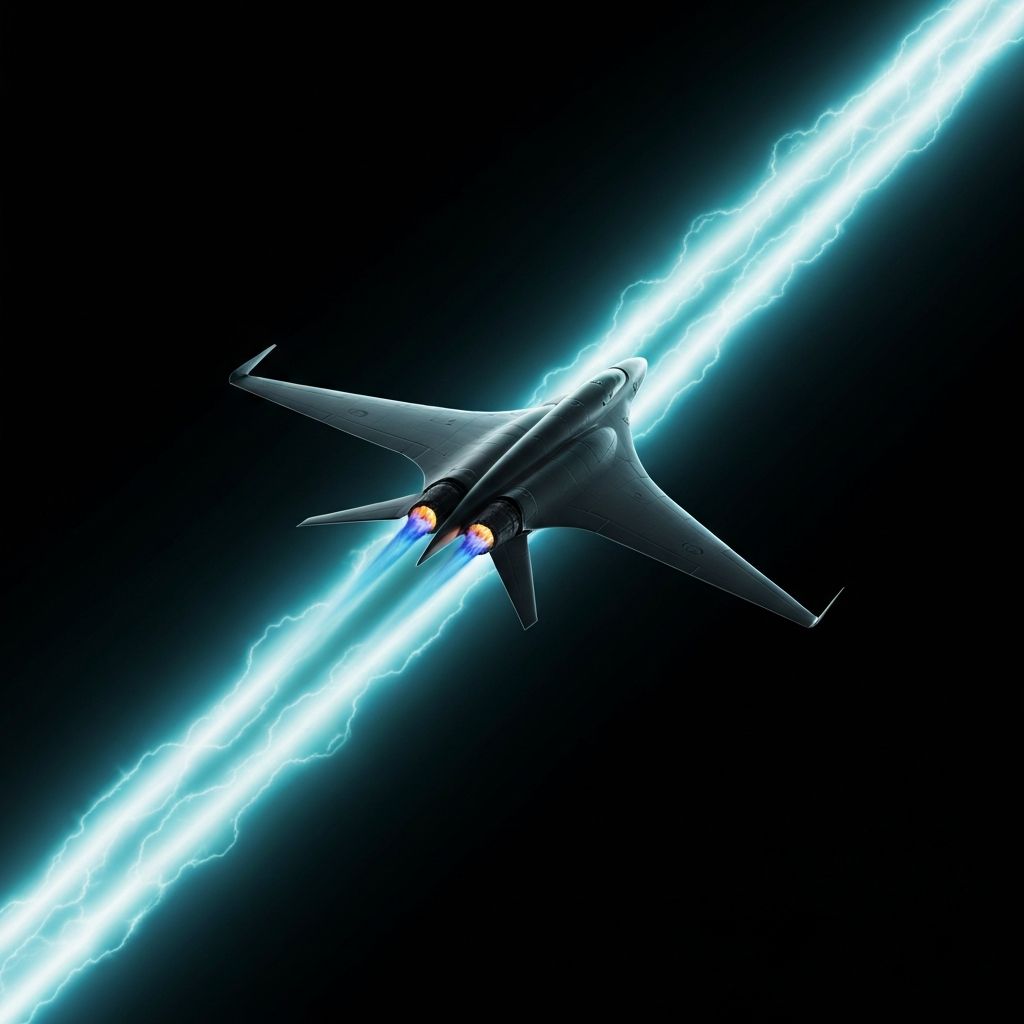
The Commercial Aviation Stakes
The commercial aviation market has been watching closely. Several major aerospace primes have taken stakes in Reaction Engines over the years, including BAE Systems and Rolls-Royce. The central question for governments and investors alike is whether SABRE can survive the valley of death between successful ground demonstrations and full-scale flight tests, which remain years away.
Reaction Engines CEO Mark Thomas said in a statement that the company remains on track for hot-fire engine tests within the next 18 months, a milestone that would represent the most significant validation of the technology to date. The Mach 5 dream, grounded in British engineering ambition for a generation, is inching closer to takeoff.